One in Five U.S. Companies Say China Has Stolen Their Intellectual Property
Fortune Magazine
https://fortune.com/2019/03/01/china-ip-theft/
U.S. Senators Introduce New Bill to Punish Chinese Technology Theft
Reuters.com
https://reut.rs/2BizNtd
COVID-19 Exposes The Threat of China’s Theft of American Intellectual Property
The Hill, by Tom Tillis
https://bit.ly/31mkQB3
NSA Chief Robert O’Brien Warns of Damage to Economy, Undermining Sovereignty
Wall Street Journal
https://www.wsj.com/articles/white-house-national-security-adviser-warns-of-chinas-bid-to-damage-our-economies-11593038748
https://bit.ly/2NGaiEA
Expert Details What China Does After Stealing IP
National Defense
https://bit.ly/2ZhEUBV
China Steals US Designs for New Weapons, Getting Away With ‘Greatest Intellectual Property Theft in History’
Business Insider
https://bit.ly/3ihOAoT
US Accuses China of Hacking Coronavirus Research
BBC News
https://www.bbc.com/news/world-us-canada-52656656
Chinese Professor Found Guilty of Economic Espionage, Theft of US Trade Secrets
NTD News
https://bit.ly/38g3G9B
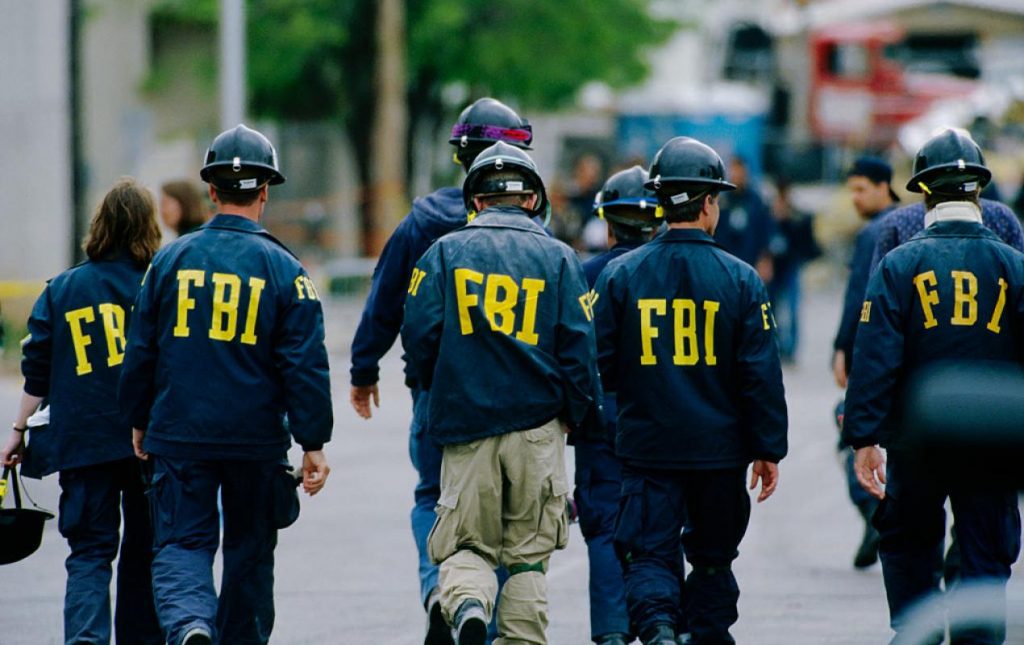
The FBI has identified China the biggest law enforcement threat to the United States, and its director said Beijing was seeking to steal American technology by “any means necessary”
The United States has long said that intellectual property theft has cost the US economy billions of dollars in revenue and thousands of jobs.
So just how much damage has it done?
A federal judge recently issued a $1.5 million fine to a Chinese wind turbine company, Sinovel, for stealing key intellectual property from a Massachusetts technology company, American Superconductor (AMSC).
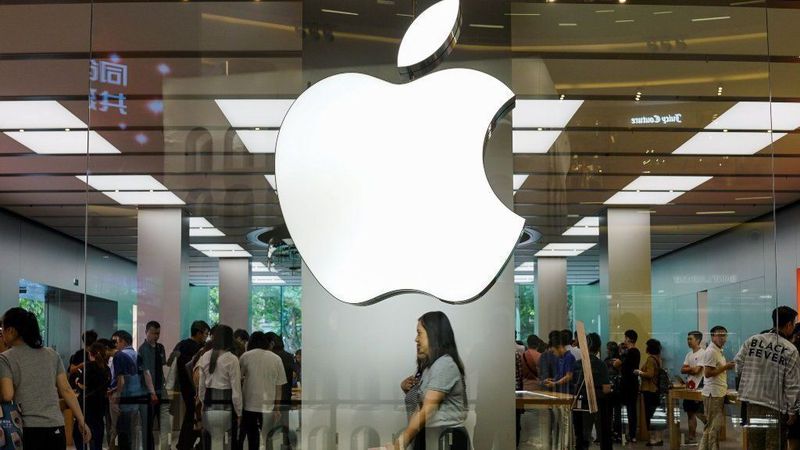
Customers shop at an Apple showroom in Shanghai in 2017. For Apple, China is the country where its iPhone is assembled, a huge market for its phones — and a potential pilferer of trade secrets.
To hear the Americans tell it, the Chinese have gone on a commercial crime spree, pilfering trade secrets from seed corn to electronic brains behind wind turbines. China has stripped the arm off a T-Mobile robot, the U.S. says, and looted trade secrets about robotic cars from Apple.
Intellectual property, or IP, theft was a component in the post-war rise of capitalist Asia. But in China, the issue is rampan.
President Donald Trump’s negotiators are hoping to seal a trade deal with Beijing. One almost feels sorry for them.
The United States has long said that intellectual property theft has cost the US economy billions of dollars in revenue and thousands of jobs.
So just how much damage has it done…
The announcement comes weeks after President Trump limited the number of Chinese citizens who can work in the United States for five state-run Chinese news organizations.
In a sharp escalation of tensions between the two superpowers, China announced on Tuesday that it would expel American journalists working for The New York Times, The Wall Street Journal and The Washington Post. It also demanded that those outlets, as well as the Voice of America and Time magazine, provide the Chinese government with detailed information about their operations.
The announcement, made by China’s Ministry of Foreign Affairs, came weeks after the Trump administration limited to 100 the number of Chinese citizens who can work in the United States for five state-run Chinese news organizations that are widely considered propaganda outlets.
China instructed American journalists for the three news organizations whose press credentials are due to expire this year to “notify the Department of Information of the Ministry of Foreign Affairs within four calendar days starting from today and hand back their press cards within ten calendar days.” Almost all the China-based journalists for the three organizations have press cards that expire this year.
The announcement went on to say that the American journalists now working in mainland China “will not be allowed to continue working as journalists in the People’s Republic of China, including its Hong Kong and Macao Special Administrative Regions.” The two territories are semiautonomous and in theory have greater press freedoms than the mainland.
The Ministry of Foreign Affairs said the decisions “are entirely necessary and reciprocal countermeasures that China is compelled to take in response to the unreasonable oppression the Chinese media organizations experience in the U.S.”
The statement also accused the United States of “exclusively targeting Chinese media organizations,” adding that it was “driven by a Cold War mentality.” The new limits imposed by the Trump administration effectively forced 60 Chinese employees of the state-run organizations to leave the country.
Reporters at foreign news outlets in China were among those who aggressively reported on the coronavirus epidemic in January and February, including in its earliest days, when it was a regionalized outbreak in central China and the Chinese government sought to play down its severity.
The news organizations have also reported in the past year on other issues deemed extremely sensitive by Chinese officials, including the mass internment of Muslims in the Xinjiang region and the shadowy business dealings of family members of leaders, including President Xi Jinping.
Dean Baquet, the executive editor of The Times, condemned the expulsion of U.S. reporters in a statement, calling it “especially irresponsible at a time when the world needs the free and open flow of credible information about the coronavirus pandemic.”
“It is critical that the governments of the United States and China move quickly to resolve this dispute and allow journalists to do the important work of informing the public,” he said. He noted that The Times has more journalists in China than anywhere else internationally.